On the afternoon of March 26, the School of Foreign Languages held a university-level teaching salon in Room 201 of the Main Building A. The event, themed "AI Empowering Foreign Language Teaching and Assessment," was chaired by Vice Dean Li Jiajun and attended by nearly one hundred faculty members from both within and outside the school.
First, Vice Dean Li provided an overview of the new objectives and positioning of the College English curriculum. He emphasized that College English education should enhance students' comprehensive English proficiency, particularly in areas such as cross-cultural communication, international dissemination, and the application of English in professional fields. It should also strengthen students' cultural confidence and cross-cultural awareness, fostering their ability to tell China's stories and amplify China's voice in English. Additionally, it should promote the integration of English proficiency with professional skills, contributing to the cultivation of interdisciplinary, innovative, and internationally competitive talents across various fields.
He further encouraged faculty members to proactively embrace and apply artificial intelligence, outlining the requirements for AI-driven educational transformation as specified in the Outline for Building a Leading Education Nation (2024–2035). Vice Dean Li also shared information on upcoming AI-related special projects available for faculty application.
Following this, Ms. Huang Yadan and Mr. Li Chao demonstrated how artificial intelligence can be utilized in foreign language education to assist teachers in instruction, support student learning, and enhance academic assessment.
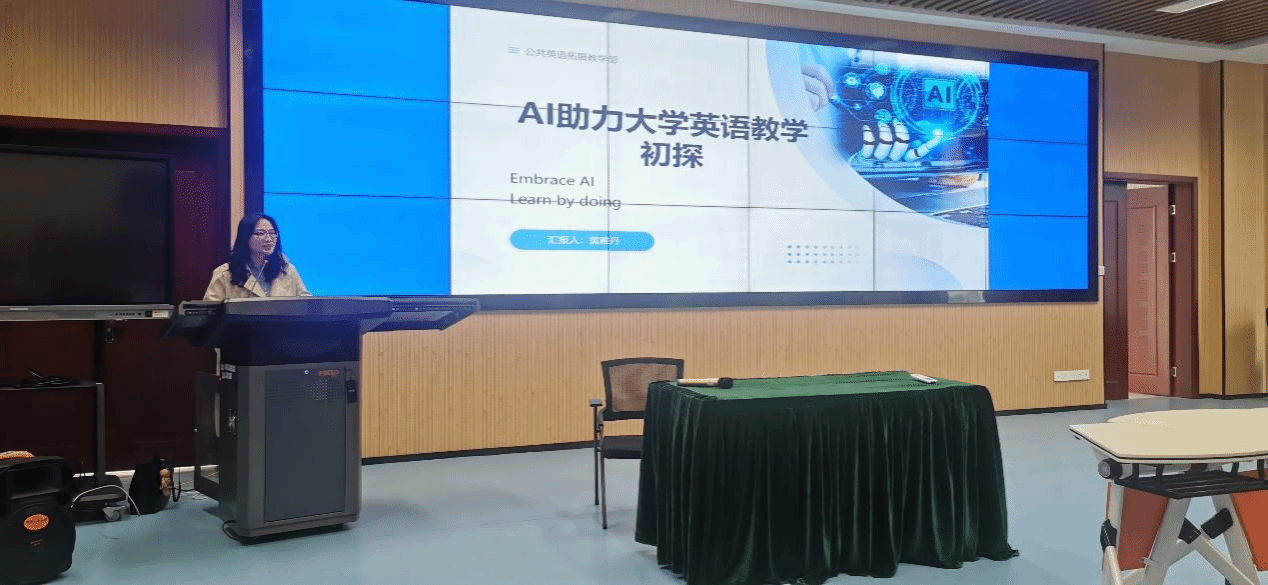
Ms. Huang Yadan analyzed the challenges and opportunities that teachers face in the wave of AI, and shared practical strategies for utilizing large models such as DeepSeek, Kimi, Doubao, Tongyi Qianwen, and Xuexitong to assist in the teaching of college English writing, speaking skills, and vocabulary. Ms. Huang emphasized that both teachers and students should actively embrace AI and explore its applications through practice.
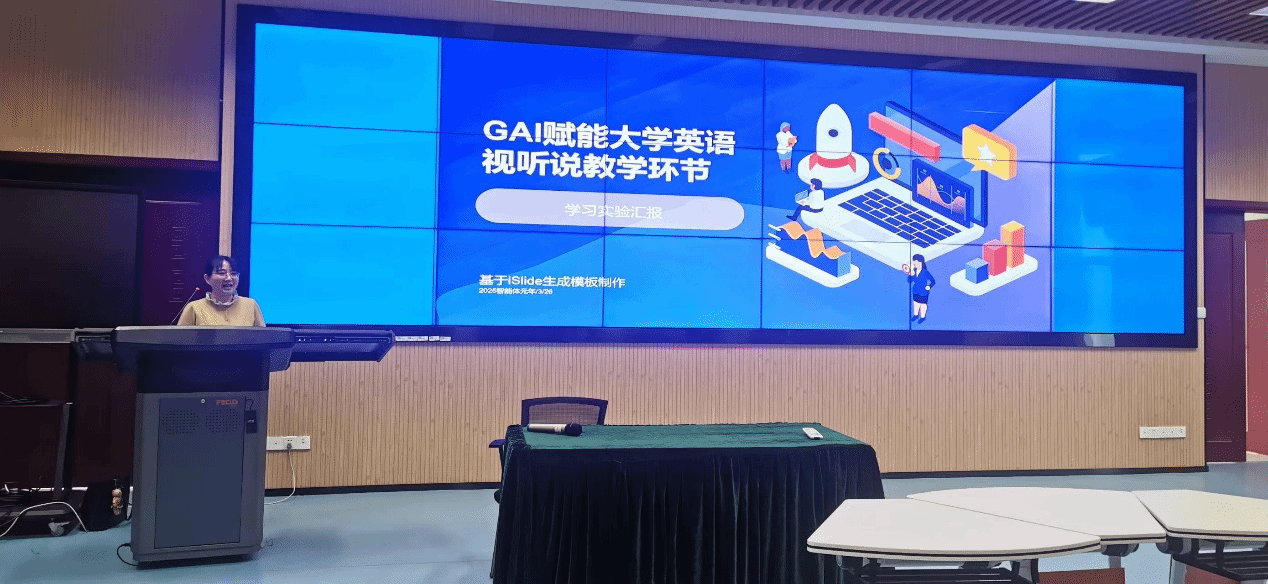
Ms. Li Chao compared different models of generative artificial intelligence from both domestic and international contexts, analyzing their respective strengths. He then explored how generative AI can empower the teaching of college English viewing, listening, and speaking from four perspectives: listening instruction, speaking instruction, critical thinking cultivation, and cross-cultural competency development.
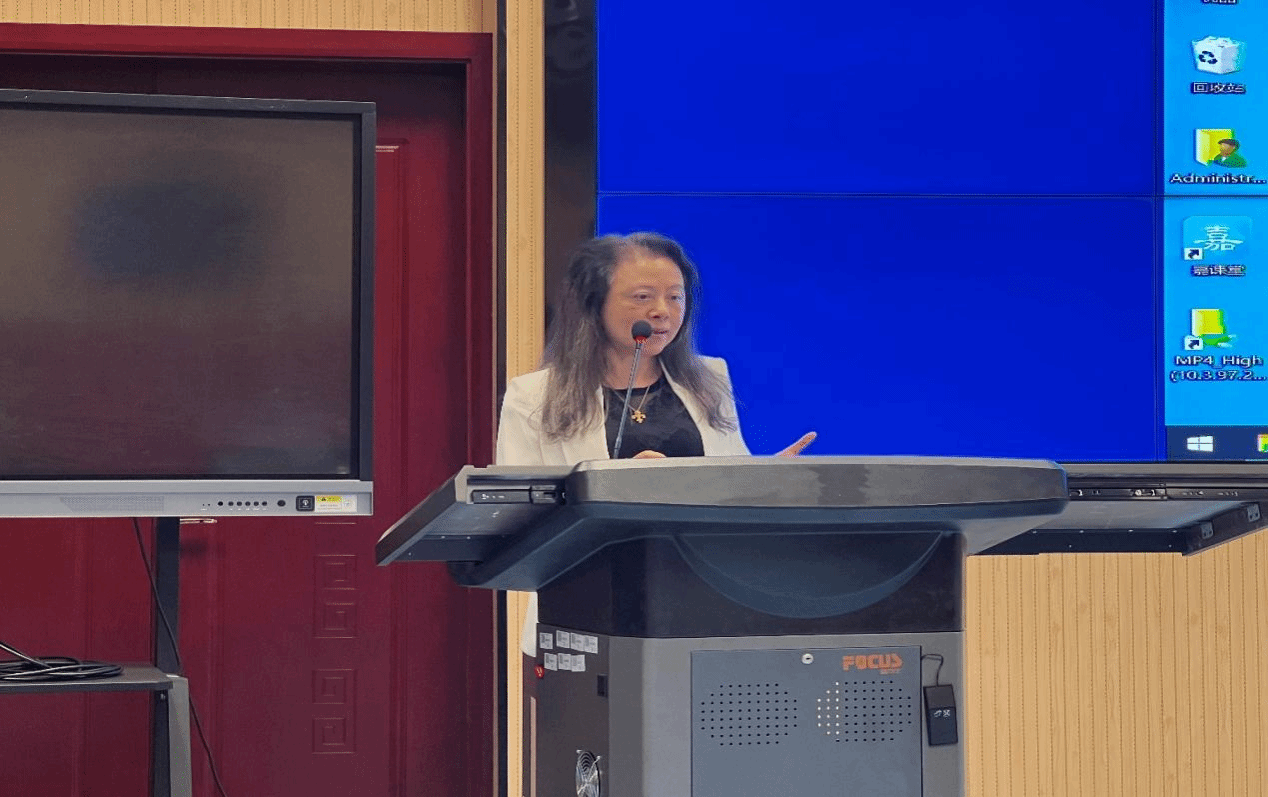
Professor Chen Xin, Director of the Faculty Development and Teaching Quality Evaluation Center, expressed appreciation for the two teachers' presentations. She commended their spirit of exploration and pioneering demonstration of how college foreign language education can leverage AI tools to enhance the teaching, learning, and assessment of language skills such as listening, speaking, reading, writing, and translation. Their efforts, she noted, have played an exemplary and leading role in this regard.
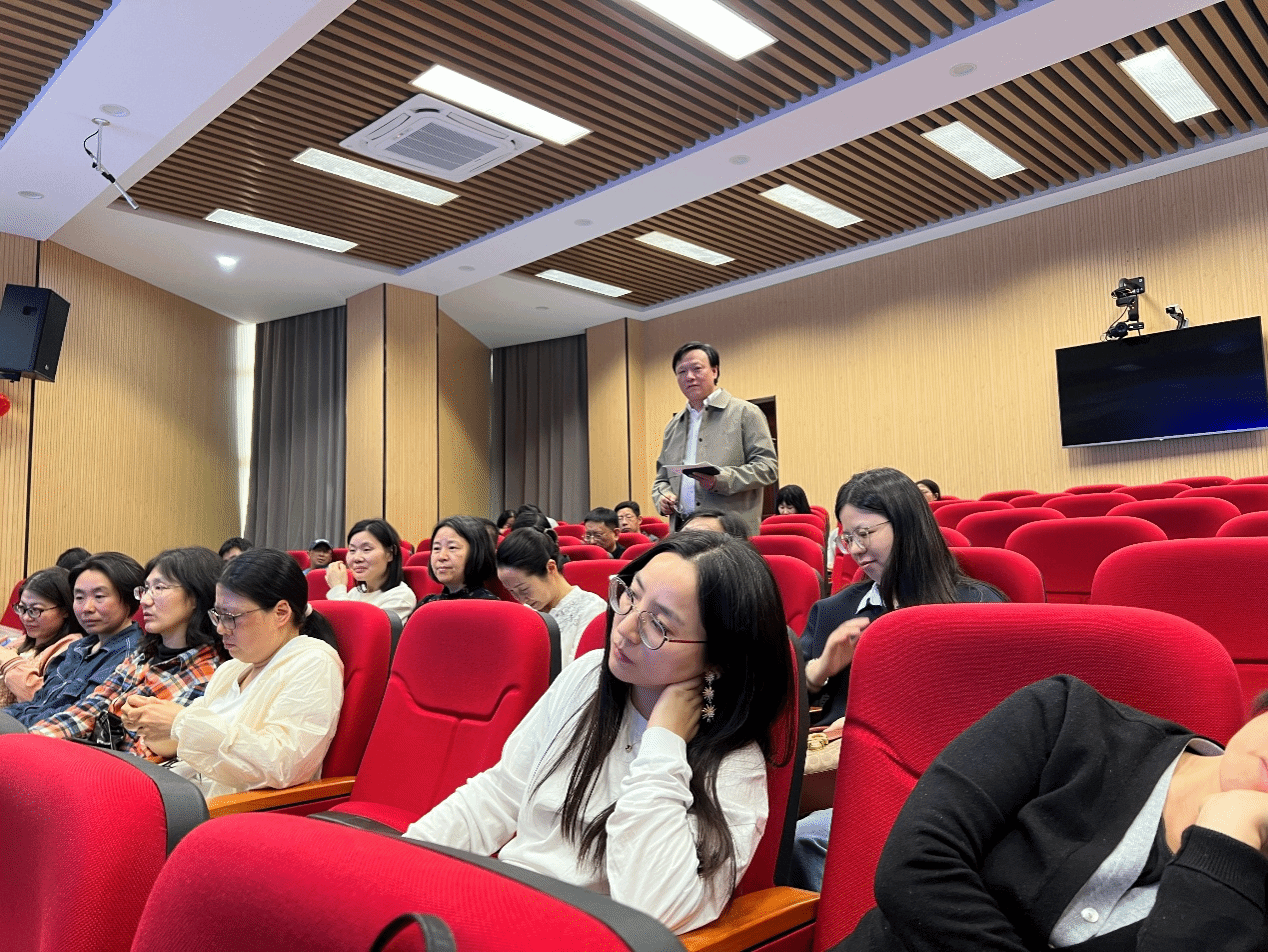
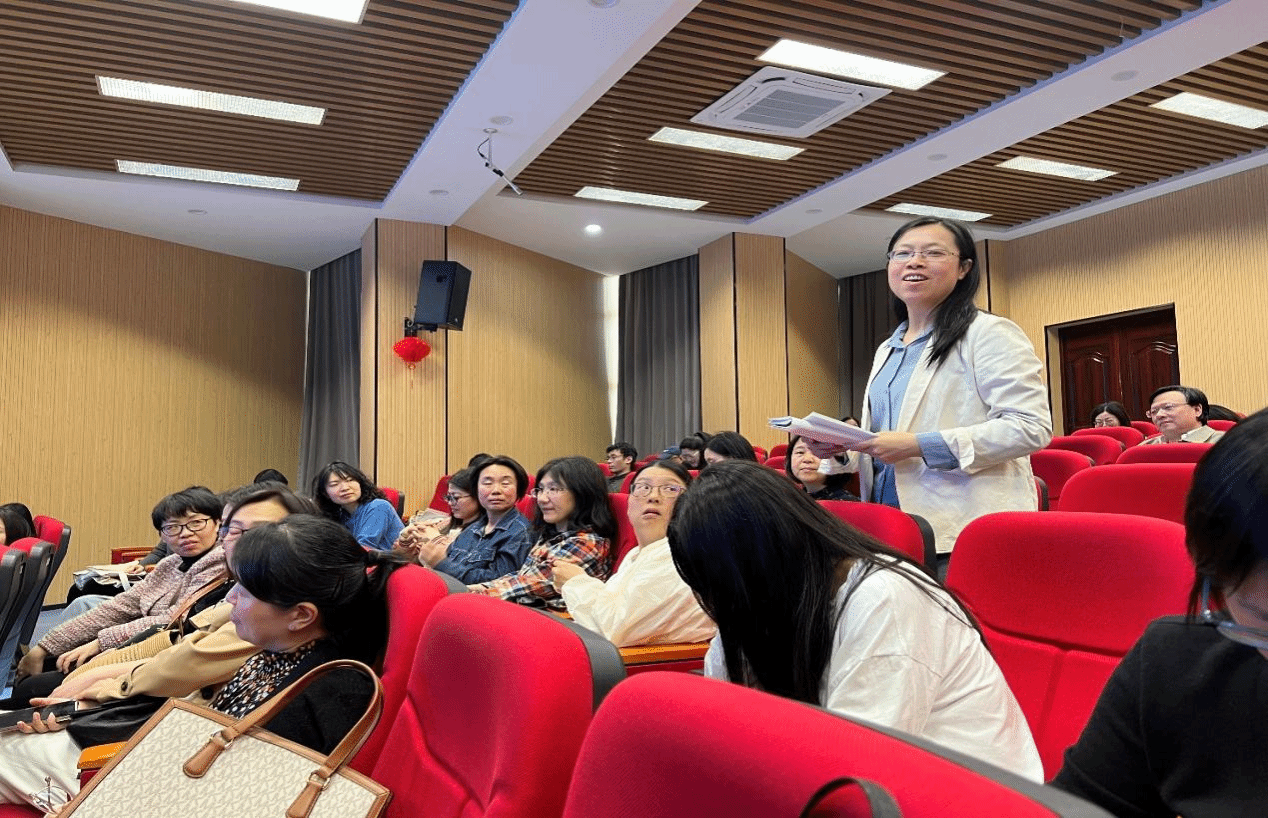
The heads of various departments shared their insights based on their respective areas of work. Hua Houkun, Director of the Basic Public English Teaching Department, Kong Lingxuan, Director of the Extended Public English Teaching Department, and Cao Yajie, Head of the Japanese Language Department, all emphasized that in the era of artificial intelligence, college foreign language teachers must recognize the opportunities AI brings to foreign language education. They noted that the transformation of educational technology will only enhance the efficiency of foreign language teaching. Foreign language educators should actively embrace AI, improve their digital and intelligent literacy, and explore strategies for integrating AI into various aspects of foreign language education and teaching. By leveraging AI technology, they can enhance the teaching, learning, and assessment of foreign language skills.
Director Hua pointed out that AI-empowered higher education has become a trend, and teachers must proactively adapt to achieve synergy among instructors, students, and technology. Director Kong stressed the need to continue in-depth exploration of various scenarios for applying AI in foreign language education.

 Chinese
 English