On March 20, at the invitation of SFL, Professor Li Min from the School of Foreign Studies at Nankai University delivered an enlightening academic lecture titled "Foreign Language Education: Why and How" for the faculty of the School of Foreign Studies. Over 70 faculty members and students from the School attended the lecture online. The event was presided over by Vice Dean Li Jiajun.

During the lecture, Professor Li Min began by reflecting on the questions he had during his undergraduate and postgraduate studies. He elaborated on the necessity of establishing foreign language education as a discipline, discussing its similarities and differences with traditional fields such as applied linguistics, second language acquisition, foreign language curriculum and pedagogy, and educational linguistics. He also addressed core issues including the disciplinary framework and research paradigms of foreign language education, and illustrated the impact of this field on foreign language teaching and research with relevant case studies. Professor Li’s lecture provided a detailed analysis of the necessity, uniqueness, and value of foreign language education for both teaching and research.
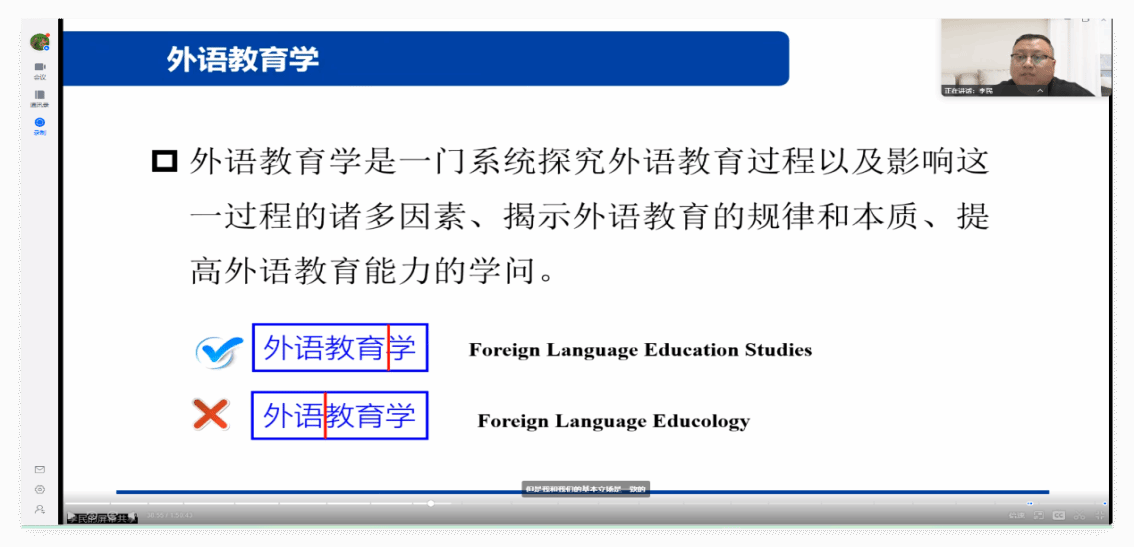
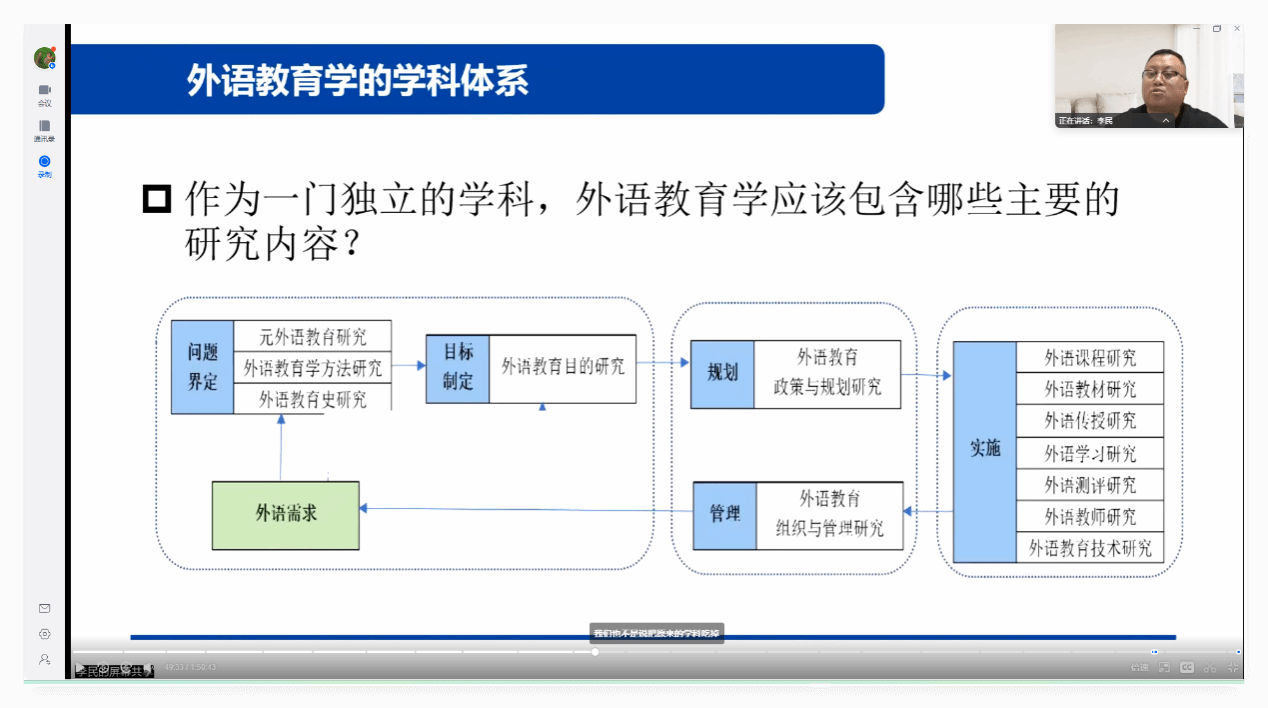
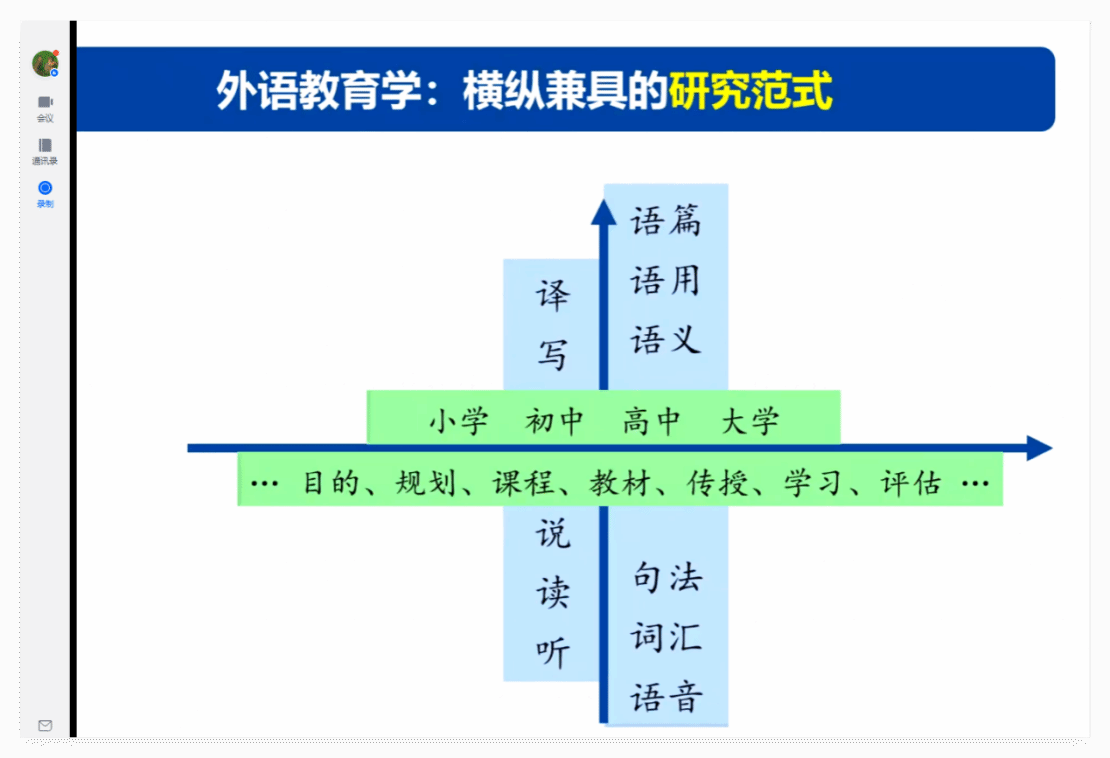
During the discussion session, Professor Li Min elaborated on the compatibility of foreign language education with other languages, how foreign language teachers can conduct classroom-based research by integrating teaching practices, as well as issues related to the disciplinary structure of foreign language education and the disciplinary affiliation of subject-based teaching (English).
Since its proposal in 2016, foreign language education has garnered significant attention from the academic community. In January 2024, it was officially included in the Ministry of Education's disciplinary and professional catalog, becoming a secondary discipline under the primary discipline of foreign languages and literature. Foreign language education holds great significance in helping language educators anchor their goals, maintain focus, and recognize the value of foreign language professionals in the context of national development and the construction of "Double First-Class" initiatives. It encourages the full utilization of artificial intelligence to empower foreign language teaching and research, thereby enhancing the effectiveness of foreign language education. Foreign language teachers can conduct research across 13 relevant areas of foreign language education at the primary, secondary, and tertiary levels. This lecture has provided clear direction for the faculty of the college in their foreign language education and teaching research.

 Chinese
 English